Why Basic Boating Knots Remain Crucial
In an era of advanced marine technology, the humble knot might seem antiquated. However, when critical systems fail or unexpected weather strikes, it’s often these basic skills that become lifelines. A well-executed cleat hitch can prevent your boat from drifting, while a secure bowline can safely attach a line to an anchor or mooring point. These practical boating knots are inexpensive to learn but pay dividends in preventing costly damage and ensuring the safety of everyone aboard. According to the U.S. Coast Guard Auxiliary (2025), a significant percentage of minor boating incidents are attributed to improper docking and mooring procedures, highlighting the continued importance of knot proficiency.
Last updated: May 6, 2026
The Workhorse: The Cleat Hitch
The cleat hitch is arguably the most frequently used not in boating. Its primary function is to secure a line to a cleat, a common fixture on docks and boats. A proper cleat hitch is easy to tie, quick to release, and holds firmly under strain, making it indispensable for docking and tying up fenders. Understanding its nuances can prevent your boat from unexpectedly moving, a common issue that can lead to fender damage or hull scrapes.
When tying a cleat hitch, the key is to create a figure-eight pattern with the rope’s final turn, ensuring it cinches down against the cleat horns. Avoid simply wrapping the rope around the cleat multiple times, as this can create a knot that’s impossible to untie under load. A common mistake is not completing the figure-eight, leaving the knot prone to slipping.
The Versatile Bowline: Creating a Fixed Loop
The bowline is another foundational knot, celebrated for its ability to form a secure, non-slipping loop at the end of a rope. This loop can be passed around a post, attached to an anchor shackle, or used for various other purposes where a fixed loop is needed. Its reliability is legendary; it holds fast under heavy load but can be untied easily, even after being subjected to significant stress. Learning the bowline is a rite of passage for many sailors, and its utility extends far beyond the deck.
A common practical application is attaching your anchor rode to the anchor itself. Without a reliable loop, you risk losing your anchor. Another use is creating a temporary handle or attachment point on a line. The ‘rabbit hole’ method is a popular and straightforward way to tie this knot, ensuring it’s tied correctly every time.
Securing Fenders: The Clove Hitch
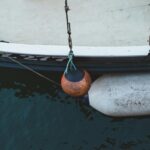
Fenders are essential for protecting your boat’s hull and the dock from abrasive contact. The clove hitch is an excellent knot for temporarily attaching fenders to lifelines, rails, or stanchions. It’s quick to tie and adjust, allowing you to position your fenders precisely where needed. While simple, it’s crucial to tie it correctly so it doesn’t slip, especially if the fender line becomes wet or slick.
To ensure security, the clove hitch should be tied so that both parts of the rope lie alongside each other. If it’s tied with the turns crossing, it’s less secure. For added safety, many boaters add a half hitch or a stopper knot at the working end, particularly if the line is under constant stress or subject to vibration.
Controlling Loads: The Figure-Eight Knot
The figure-eight knot, often used as a stopper knot, is invaluable for preventing a line from running through a block or fairlead. It’s larger and easier to untie than a simple overhand knot, making it a safer choice for critical applications. Beyond its stopper function, the figure-eight loop is also a strong and reliable way to create a fixed loop, similar to the bowline but generally easier for beginners to master and inspect.
In practice, you might use a figure-eight knot to prevent a halyard from slipping out of its clutch or winch. It’s also frequently used to create a strong attachment point on a docking line. When used as a stopper, its distinct shape makes it easy to identify, which is a significant safety advantage.
Reliable Anchoring: Round Turn and Two Half Hitches
For anchoring, especially in conditions that might see significant surge or strain, the round turn and two half hitches provide a secure method of attaching your anchor rode to a fixed point, such as a dock ring or a mooring buoy. The round turn takes most of the initial strain, while the two half hitches secure the end of the line. This knot is less prone to jamming than some others and allows for some degree of adjustment.
This knot is particularly useful when you need to attach a line to a ring or post where the load might come from multiple directions. The round turn distributes the initial pressure, and the half hitches act as a secure locking mechanism. It’s a strong option for situations where the integrity of your mooring is paramount.
Rope Care: Extending the Life of Your Lines
Even the best boating knots are only as strong as the lines they’re tied with. Proper rope care is essential for maintaining the integrity and longevity of your dock lines, anchor rode, and other marine ropes. As of 2026, synthetic ropes like nylon and polyester are popular for their strength, elasticity, and resistance to rot and UV damage. However, they are not indestructible.
Regularly inspect your ropes for signs of wear, such as fraying, abrasion, or discoloration. Rinse ropes with fresh water after each use, especially if exposed too saltwater to remove salt crystals that can degrade the fibers. Store them loosely coiled in a dry, well-ventilated area away from direct sunlight. Avoid storing wet ropes, as this can lead to mildew and internal fiber damage. Understanding the specific needs of different rope materials—natural versus synthetic—is key to maximizing their lifespan and ensuring they perform reliably when you need them most.
Choosing the Right Rope Material
The choice of rope material significantly impacts not performance and overall utility. Nylon offers excellent stretch and shock absorption, making it ideal for anchor lines and dock lines where dynamic loads are expected. Polyester is stronger, less elastic than nylon, and has superior UV resistance, making it a good choice for halyards and control lines where minimal stretch is desired. Polypropylene is lightweight and floats, often used for dinghies or temporary applications, but it degrades faster in sunlight.
When selecting ropes, consider the specific application. For docking, a rope with good shock absorption like nylon is beneficial. For standing rigging, like halyards, a low-stretch material such as polyester or Dyneema is preferred. The diameter of the rope should also be appropriate for the size of your boat and the expected loads. According to Marine Industry standards as of 2026, dock lines for a 30-foot vessel typically range from 7/16-inch to 5/8-inch diameter, depending on the expected conditions.
Common Mistakes in Tying Boating Knots
One of the most common mistakes is tying a knot incorrectly. This can range from a slightly misplaced turn to completely misunderstanding the knot’s structure. This often happens under pressure, such as during a sudden squall or a tricky docking maneuver, when a boater’s technique falters.
Another frequent error is using the wrong knot for the job. For instance, using a slippery hitch when a secure, non-slipping knot is required can lead to disaster. Equally problematic is tying knots that are too complex or difficult to untie, especially in emergency situations. Over-reliance on old, worn-out ropes is also a critical mistake; always inspect your lines before and after use.
Practical Tips for Mastering Boating Knots
Practice is paramount. Dedicate time to tying and untying the essential knots regularly, even when you’re not on the water. Use a practice rope at home or dockside. Repetition builds muscle memory, ensuring you can tie them correctly under duress.
Familiarize yourself with the ‘working end,’ ‘standing part,’ and ‘bight’ of a rope. Understanding this terminology helps in learning and teaching knots. Always double-check critical knots, especially those related to anchoring or mooring, before relying on them.
Consider investing in a good knot-tying guide or app. Visual aids can be incredibly helpful for learning new techniques. And, understanding the strengths and weaknesses of different rope materials will help you choose the right line for each task.
Frequently Asked Questions
What are the three most important boating knots?
The three most critical boating knots are generally considered to be the cleat hitch for docking, the bowline for creating a fixed loop, and the clove hitch for temporary attachments like fenders. Mastering these provides a strong foundation for most common boating needs.
How often should I replace my boat ropes?
As of 2026, there isn’t a strict time limit, but ropes should be replaced when signs of significant wear appear, such as fraying, stiffness, or reduced tensile strength. Inspect them annually for UV damage, abrasion, and chemical exposure. A general guideline is to consider replacement every 5–10 years for regularly used lines, depending on material and usage.
Is the bowline knot easy to untie after load?
Yes, a correctly tied bowline is designed to be untied easily even after bearing significant load. This is one of its primary advantages over other looping knots that can jam under strain. Proper tying technique is essential for this characteristic.
What’s the difference between a cleat hitch and a clove hitch?
The cleat hitch is specifically designed to secure a line to a cleat, forming a secure but releasable connection. The clove hitch is a general-purpose knot for tying a rope to a post or rail, useful for fenders, but can slip if not tied correctly or if the surface is smooth.
Can I use any rope for all boating applications?
No, different applications require different rope types. Nylon offers stretch for shock absorption, polyester offers low stretch and UV resistance, and specialized materials like Dyneema offer extreme strength. Using the wrong rope type can compromise safety and performance.
Are expensive marine ropes worth the cost?
High-quality marine ropes, made from durable materials like solution-dyed acrylic or high-tenacity polyester, are generally worth the investment. They offer superior UV resistance, abrasion resistance, and consistent strength, leading to longer lifespans and enhanced safety compared to cheaper alternatives, ultimately saving money in the long run.
Last reviewed: May 2026. Information current as of publication; pricing and product details may change.
Editorial Note: This article was researched and written by the Perform Marine editorial team. We fact-check our content and update it regularly. For questions or corrections, contact us.